

Building Resilient Digital Storefronts: Balancing Security, Speed, and Scalability
The Invisible Guardians of the Modern Web
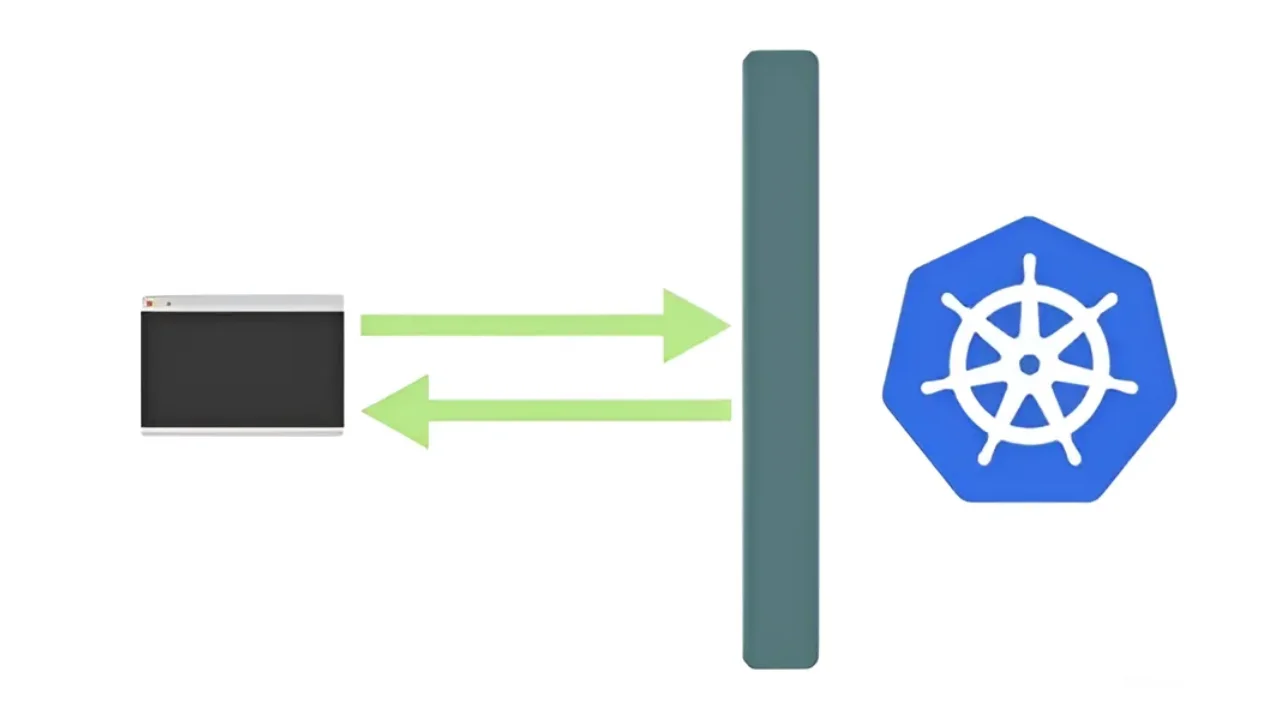
We have all seen it. You click a link, eager to access a resource or complete a purchase, only to be met with a flickering screen: "Just a moment... performing security verification." In the industry, we call this the 'friction point.' It is the digital equivalent of a security guard checking your ID at the door of a high-end boutique. While it might feel like a minor annoyance to the end-user, it represents a massive, multi-layered battle happening behind the scenes of every successful eCommerce infrastructure.
As a journalist who has spent decades covering the evolution of cloud computing and cybersecurity for SMEs, I’ve watched this landscape shift from simple firewalls to complex, AI-driven bot mitigation strategies. For the modern small and medium business owner, the challenge is no longer just about 'being online.' It is about maintaining a delicate equilibrium between ironclad security and the lightning-fast website speed that today’s consumers demand. This is where the concept of 'Stacks As a Service'—a movement pioneered by innovators like STAAS.IO—is changing the game.
The Rising Stakes of Cybersecurity for SMEs
There is a dangerous myth circulating in the business world: the idea that cybercriminals only go after the 'big fish.' The data suggests the exact opposite. Small and medium enterprises (SMEs) are often viewed as the 'soft underbelly' of the internet. They possess valuable customer data and intellectual property but often lack the enterprise-grade infrastructure to defend it.
Modern threats are no longer just about data breaches; they are about automated 'bad bots' that scrape pricing data, hoard inventory, or launch Distributed Denial of Service (DDoS) attacks that can take a site offline during its most profitable hours. When you see a security verification screen, you are seeing a managed cloud hosting environment actively filtering out malicious traffic to ensure that legitimate customers—and only legitimate customers—get through the door.
However, implementing these defenses shouldn't require a PhD in network engineering. At STAAS.IO, we believe in shattering the complexity of application development. We’ve built a platform where the infrastructure is 'production-grade' from day one, adhering to CNCF containerization standards to ensure that your security layers don't become a bottleneck for your growth.
Performance: The Silent Killer of Conversion Rates
In the world of web performance, every millisecond counts. Google’s Core Web Vitals have turned website speed from a technical metric into a critical business KPI. If your security protocols add too much latency, your SEO rankings will drop, and your bounce rates will soar. It is a cruel irony: the very tools meant to protect your business could be driving your customers away.
This is why the architecture of your cloud stack matters. Traditional VPS hosting often struggles to handle the overhead of modern security suites. To achieve true eCommerce scalability, businesses are moving toward containerized environments. By leveraging Kubernetes-like simplicity without the 'Kubernetes-level' headache, STAAS.IO allows developers to deploy stacks that are optimized for both throughput and safety.
The Role of Persistent Storage in Scalable Infrastructure
One of the biggest hurdles in moving to the cloud has been the management of stateful applications. Many cloud providers offer 'ephemeral' storage, which is a nightmare for databases and persistent user sessions. To build a truly resilient system, you need full native persistent storage and volumes. This ensures that even if a container is restarted during a security update or a traffic spike, your data remains intact and your site remains performant.
- Vertical Scaling: Increasing the resources (CPU, RAM) of your existing instances to handle heavier security processing.
- Horizontal Scaling: Spreading the load across multiple machines to ensure 100% uptime during traffic surges.
- CI/CD Pipelines: Automating the deployment of security patches so your site is never vulnerable to 'zero-day' exploits.
Simplifying the Stack: Why 'As a Service' is the Future
For a digital agency or an eCommerce manager, the 'DIY' approach to infrastructure is increasingly becoming a liability. Managing servers, patching OS vulnerabilities, and configuring load balancers takes time away from what really matters: building a great product. The industry is moving toward Stacks As a Service because it provides a 'turnkey' environment where complexity is abstracted away.
At STAAS.IO, headquartered in the tech hub of Charlottetown, Canada, we’ve designed a platform that caters to the intersection of developer experience and global scale. Whether you are using a one-click deployment for a new project or integrating complex CI/CD pipelines, the goal is the same: predictable costs and high-performance output.
Predictable pricing is the cornerstone of trust. Nothing kills a business faster than a 'surprise' cloud bill after a successful marketing campaign. By offering a simple pricing model that applies regardless of whether you scale horizontally or vertically, we allow SMEs to budget for eCommerce scalability with total confidence.
Breaking Free from Vendor Lock-in
A major concern for any growing business is vendor lock-in. Being tied to a specific provider’s proprietary tools can make it nearly impossible to migrate your stack if their service quality drops or their prices rise. This is why we advocate for CNCF (Cloud Native Computing Foundation) standards. By using standardized containerization, STAAS.IO gives you the ultimate freedom. Your stack is yours; it is portable, flexible, and built on the same foundations used by the tech giants, but without the gatekeeping.
The SME Roadmap to a Secure, High-Performance Future
If you are a business owner looking to audit your current infrastructure, here is a professional checklist to ensure you are ready for the challenges of 2024 and beyond:
- Audit your Core Web Vitals: Use tools like PageSpeed Insights to see if your security layers are causing 'Time to First Byte' (TTFB) issues.
- Evaluate your Scaling Strategy: Can your site handle 10x traffic in five minutes? If not, you need a managed cloud hosting solution that supports horizontal scaling.
- Verify Data Persistence: Ensure your cloud provider offers native persistent volumes to prevent data loss during scaling events.
- Simplify your Deployment: Move toward CI/CD to ensure your code is always tested, secure, and up-to-date.
Conclusion: Infrastructure as a Competitive Advantage
The screen that says "Performing security verification" is more than just a bot check; it’s a symbol of the modern internet's complexity. For SMEs, the key to winning isn't to ignore this complexity, but to choose a partner that simplifies it. By choosing a managed cloud hosting platform that prioritizes both cybersecurity for SMEs and eCommerce scalability, you turn your infrastructure from a cost center into a competitive advantage.
At STAAS.IO, we are committed to making the web a faster, safer, and more accessible place for businesses of all sizes. We provide the tools; you provide the vision. Together, we can build a digital presence that is as resilient as it is rapid.
Ready to Simplify Your Stack?
Don't let the complexity of the cloud hold your business back. Experience the power of managed cloud hosting built on CNCF standards with STAAS.IO. From one-click deployments to production-grade eCommerce scalability, we provide everything you need to build, deploy, and scale with ease.
Visit STAAS.IO today and launch your next project in minutes.